Energy is one of the quiet forces behind every plastic part: the bottle cap, the medical tube, the automotive clip, the film wrap. Resin prices may get more attention, and labor shortages may cause more headaches, but electricity and fuel bills often decide whether a plastic manufacturing plant is merely busy or truly profitable.
The challenge is that energy waste in plastics is rarely dramatic. It is the hydraulic pump running at full speed while a press waits. It is a dryer left hot over the weekend. It is compressed air leaking through a fitting nobody hears over the plant floor. It is chilled water colder than the process really needs. None of these failures looks like a crisis. Together, they can become one.
Start with measurement, not guesswork
The first rule is simple: you cannot manage what you do not measure. Many plants still look only at the utility bill, which is like trying to drive by looking in the rearview mirror once a month. A serious energy program begins with submetering major loads: injection molding machines, extrusion lines, air compressors, chillers, dryers, grinders and lighting.
The useful metric is not just total kilowatt-hours. It is energy per unit of output: kilowatt-hours per kilogram of resin processed, per thousand parts, or per production hour. This lets managers see whether a line is efficient or merely productive. A machine that runs fast but wastes power during idle time may be less competitive than a slower, better-controlled system.
"In plastics, the cheapest energy is often the energy hidden in downtime, leaks and bad settings."
Hydraulics: the old workhorse with a costly habit
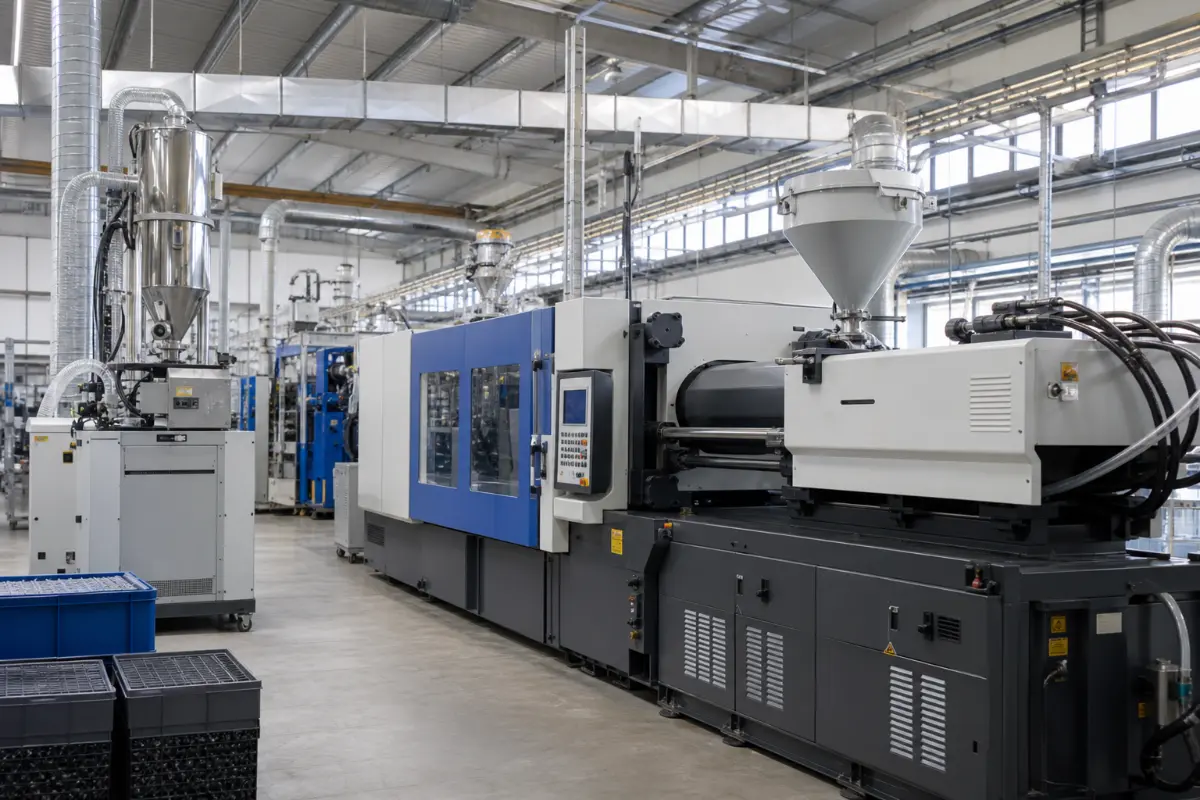
Hydraulic injection molding machines remain common because they are rugged and familiar. But traditional hydraulic systems can waste energy by running pumps continuously, even when the machine is holding, cooling or waiting. That is why many plants begin their savings work here.
Servo-hydraulic retrofits and variable-speed pump drives can sharply reduce electricity use by matching motor speed to demand. All-electric injection molding machines can use substantially less energy than conventional hydraulic machines, especially in precision applications with repeatable cycles. The exact savings depend on part design, clamp tonnage, cycle time and utilization, but the direction is clear: power on demand beats power all the time.
That does not mean every older press should be scrapped. A disciplined audit may show that a press is a good candidate for a drive upgrade, improved barrel insulation, better maintenance or tighter scheduling. The best investment is not always the newest machine; it is the machine that reduces cost per good part.
Dryers deserve more attention
Resin drying is one of the most overlooked energy users in a plastics plant. Hygroscopic materials such as PET, nylon, polycarbonate and ABS often need controlled drying before processing. If moisture remains, the plant pays twice: once in energy and again in scrap, splay, brittleness or cosmetic defects.
But overdrying is wasteful too. Dryers should be sized correctly, maintained carefully and matched to actual material throughput. Desiccant beds need attention. Filters need cleaning. Airflow and dew point should be checked, not assumed. Modern drying systems with dew-point control, variable airflow and heat recovery can reduce waste while protecting quality.
A common mistake is leaving dryers running during long pauses. A weekend shutdown plan, linked to production scheduling, can save meaningful money with no capital project at all.
Compressed air is expensive air
Compressed air feels cheap because it is invisible and convenient. It is not cheap. Producing compressed air is an inefficient way to transmit energy, and leaks can consume a surprising share of compressor output. The U.S. Department of Energy has noted that poorly maintained compressed-air systems may lose 20 to 30 percent of their air to leaks.
Plastic processors use compressed air for part ejection, conveying, valves, cleaning and packaging. The first step is a leak survey, ideally with ultrasonic detection. The second is lowering system pressure to the minimum reliable level. Every unnecessary increase in pressure forces compressors to work harder.
Plants should also ask a blunt question: does this job really need compressed air? In some cases, electric actuators, low-pressure blowers or mechanical devices can do the same work at lower cost.
Chillers and cooling towers: tune the cold side
Cooling is central to plastic manufacturing, particularly in injection molding and extrusion. Faster cooling can shorten cycle time, but colder is not always better. Chillers that run at unnecessarily low setpoints consume extra electricity and may create condensation problems.
Process cooling should be engineered around actual requirements. Mold temperature controllers, chilled-water loops and cooling towers should be balanced and maintained. Heat exchangers foul. Filters clog. Pumps run when they do not need to. Variable-frequency drives on pumps and fans can help match cooling output to demand, especially in plants with changing loads.
In colder climates, free cooling can be a powerful tool. When outdoor conditions allow, a plant can use ambient air through a dry cooler or cooling tower arrangement, reducing chiller runtime. It is not glamorous, but it is often one of the most practical energy strategies.
Extrusion: steady processes still hide waste
Extrusion lines often run continuously, which can make them appear efficient. Yet steady operation can conceal inefficient barrel heating, worn screws, poor insulation and excessive motor load. Barrel insulation blankets can reduce heat loss and improve worker comfort. Proper screw design and maintenance can reduce melt temperature variation and motor strain.
Startups and changeovers also matter. Every purge, every off-spec roll and every unstable startup carries an energy cost. Reducing scrap is therefore an energy strategy. A kilogram of rejected plastic has already consumed power in drying, conveying, melting, cooling and cutting before it becomes waste.
Use scheduling as an energy tool
Many utilities charge not only for total energy but also for peak demand. A plant may pay a penalty for the highest short interval of electricity use during the billing period. That makes scheduling important. Starting multiple large machines, compressors and chillers at the same time can create a costly peak.
Staggered startups, load shedding and smarter production planning can reduce demand charges. Where tariffs vary by time of day, energy-intensive work may be shifted away from peak-price hours. This requires coordination between production, maintenance and finance, but the reward can be immediate.
Maintenance is energy policy
Energy efficiency often sounds like an engineering project, but much of it is maintenance discipline. Clean heat-transfer surfaces. Repair steam and air leaks. Calibrate sensors. Align motors. Replace worn belts. Maintain insulation. Check hydraulic oil condition. A plant that is dirty, leaking and out of calibration will rarely be energy efficient.
Lighting upgrades to LEDs are usually easy wins, but in plastics they are rarely the whole story. The larger savings typically sit in process equipment, utilities and controls. Still, efficient lighting improves visibility and safety, and lower heat from LEDs can slightly reduce cooling load in some facilities.
Build a culture around cost per good part
The strongest plants treat energy as a production variable, not an overhead mystery. Operators should see energy data in a form they can use. Engineers should evaluate new tooling and machinery partly by energy per good part. Purchasing teams should consider lifecycle cost, not only purchase price.
ISO 50001, the international energy management standard, offers a formal framework for companies that want structure. But even without certification, the principle is useful: set a baseline, identify significant energy users, assign responsibility, measure results and keep improving.
"The goal is not to use less energy at the expense of quality. The goal is to stop paying for energy that creates no value."
The bottom line
Reducing energy costs in plastic manufacturing is not one trick. It is a sequence of practical decisions: meter the big loads, fix compressed-air leaks, control dryers, modernize hydraulic systems where justified, tune cooling, reduce scrap and schedule intelligently.
The plants that do this well gain more than lower utility bills. They gain more stable processes, better maintenance habits and a clearer view of what each part really costs. In a competitive plastics market, that clarity can be as valuable as any new machine on the floor.