On a job site, weight is not an abstract number buried in a brochure. It is the force that presses into soft ground, the load that a lowboy trailer must legally carry, and the reason one excavator feels planted while another feels nervous on the same slope. In construction, mining, forestry and road work, "operating weight" is one of the simplest specifications to read and one of the easiest to misunderstand.
At its plainest, operating weight is the approximate weight of a machine as it is expected to work. That usually means the base machine with standard equipment, lubricants, coolant, hydraulic oil, a full or near-full fuel tank and, often, an operator. For many construction machines sold in North America, the assumed operator is commonly listed around 175 pounds. Some international standards and manufacturers use different assumptions, including a 75-kilogram operator. The important point is not the exact body weight of the fictional driver. It is that operating weight tries to describe the machine in working condition, not as an empty shell.
Operating weight is not shipping weight
The distinction matters because machines are sold, transported and used in different states. Shipping weight may exclude attachments, fuel or certain counterweights. Dry weight generally excludes operating fluids. Operating weight, by contrast, is closer to the machine a contractor actually sends into the dirt.
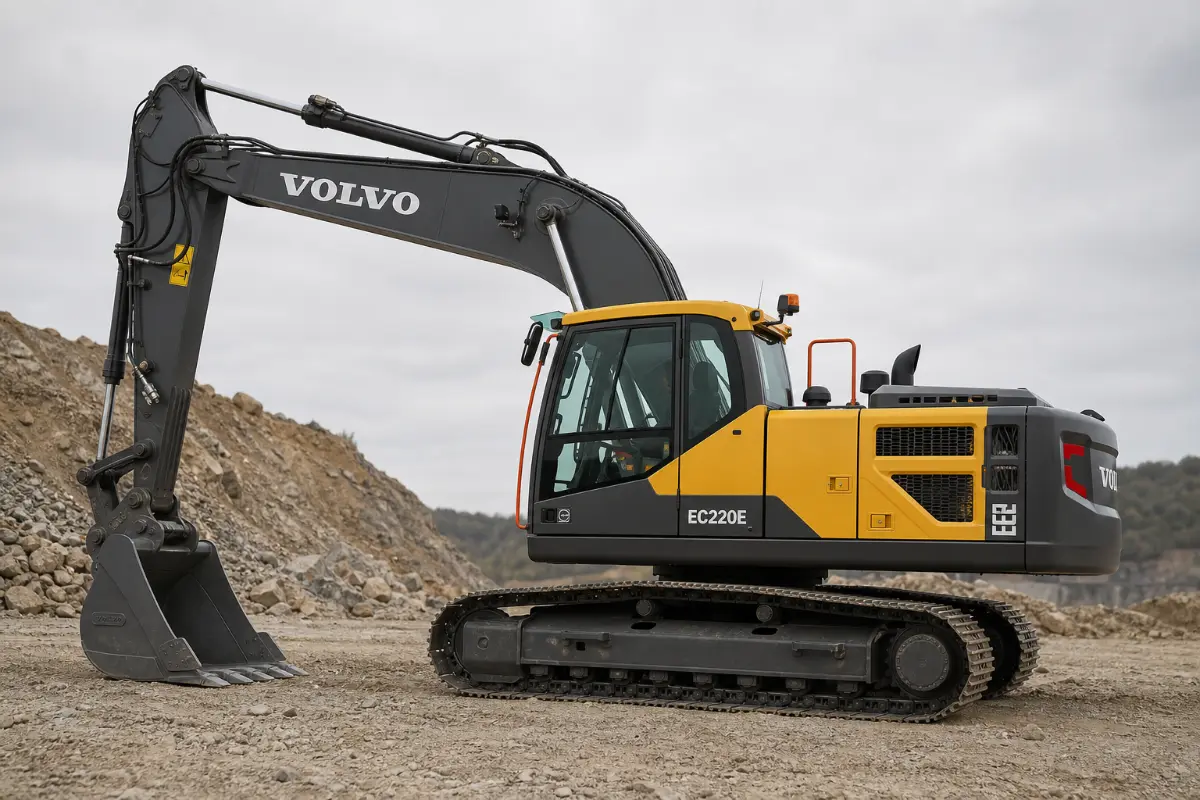
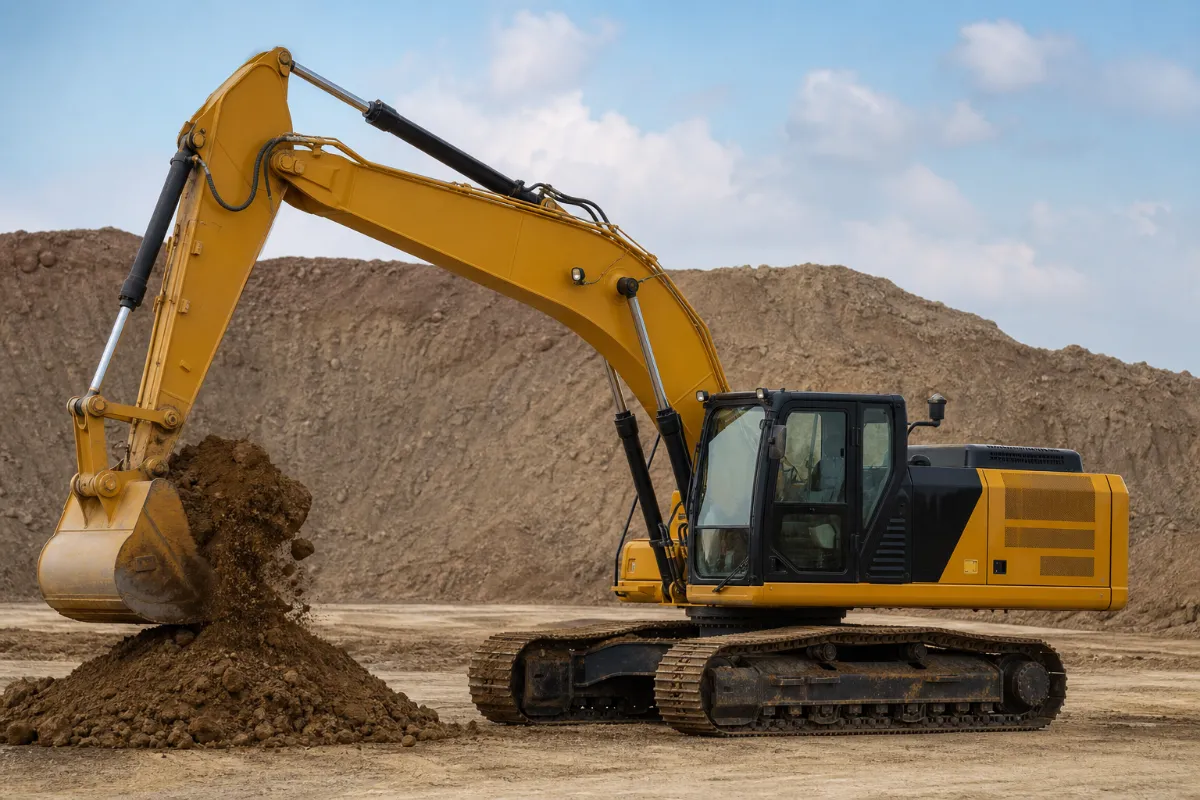
A compact track loader advertised at about 10,000 pounds operating weight may be lighter when shipped from the factory and heavier once a contractor adds a heavy mulcher, a forestry door, ballast or an over-the-tire attachment. An excavator listed at 50,000 pounds may move into a different permitting problem after a larger bucket, thumb, quick coupler and extra guarding are installed. The published figure is a starting point, not a final truth.
"Weight is a specification, but it behaves like a consequence."
Every decision around a machine changes it. Add steel, fuel, tools, mud packed into the undercarriage, or a specialized attachment, and the number climbs. Remove counterweights or run a stripped machine, and it falls. That is why fleet managers who treat operating weight as a fixed law are often surprised at the scale house.
Why it matters for transport
The most immediate reason operating weight matters is transportation. Roads are governed by weight limits, axle limits and bridge laws. A machine that looks reasonable on paper can become a costly load once the trailer, chains, attachments and permits are counted. In the United States, a common federal gross vehicle weight limit on the Interstate System is 80,000 pounds, though state rules, axle spacing and special permits shape what is legal in practice.
This is where a few thousand pounds can decide whether a contractor needs a different trailer, a different route or a permit. It can also affect timing. Oversize or overweight moves may be restricted to daylight hours, avoid certain bridges or require escorts. For a contractor trying to start a Monday morning pour or emergency utility repair, those details are not administrative noise. They are schedule risk.
Why it matters for safety and stability
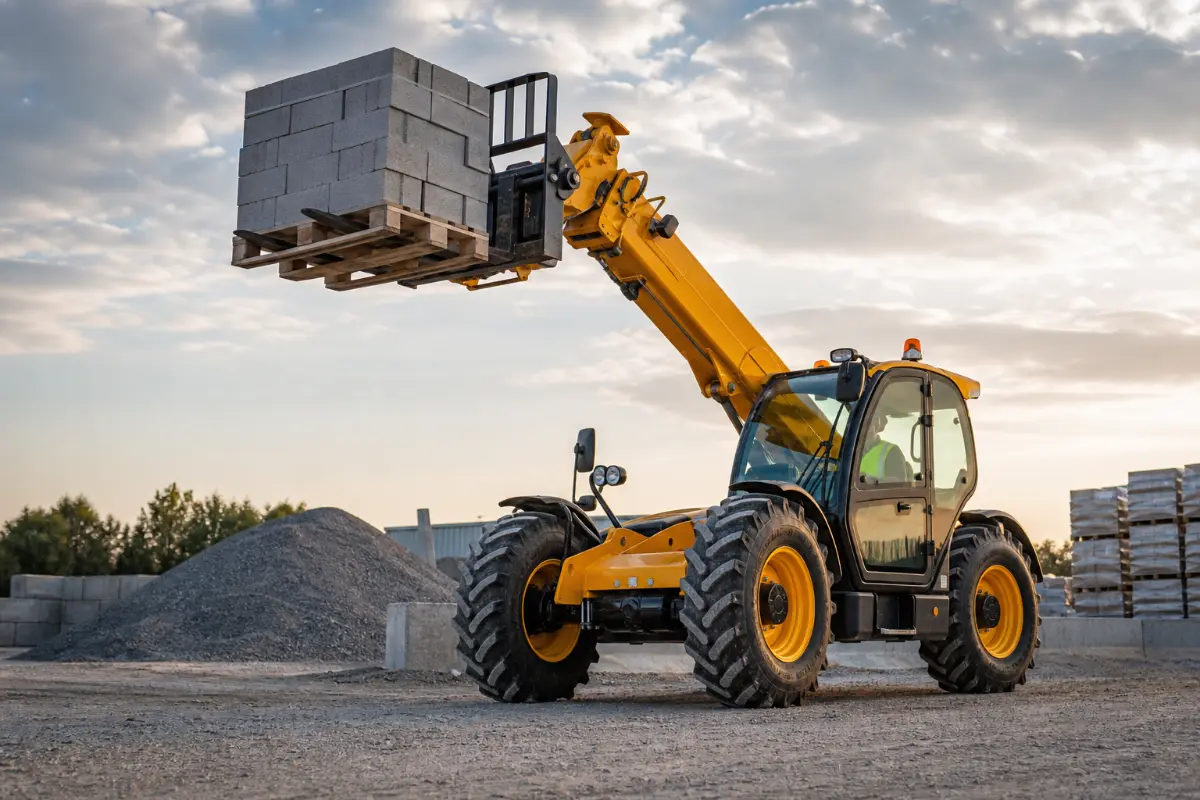
Operating weight also shapes stability. Heavier machines can feel more planted, especially when digging, lifting or pushing. But weight is not automatically safety. Distribution matters. A compact excavator with a short tail swing may carry weight differently from a conventional model. A wheel loader with a full bucket has a different center of gravity than one traveling empty. A telehandler lifting high and forward is not governed by its total weight alone, but by load charts, boom angle, reach and ground conditions.
That is why lift capacity tables are more important than intuition. A machine may weigh 20,000 pounds and still be unsafe with a particular suspended load at a particular reach. Manufacturers publish rated operating capacities and lift charts for a reason: physics is unforgiving, and it does not care how confident the operator feels.
Ground pressure: the hidden companion number
Operating weight tells you how much mass is present. Ground pressure helps explain how that mass meets the earth. A heavy tracked machine may exert less ground pressure than a lighter wheeled machine because its weight is spread over a larger contact area. This is why track loaders can work in mud where skid steers struggle, and why crawler dozers can grade on weak soils that would punish rubber tires.
For landscapers, utility crews and contractors working near finished pavement, lawns, septic fields or old structures, this is not academic. A machine with the wrong ground pressure can rut a site, crack a surface or sink where recovery becomes its own job. Operating weight should be read alongside track width, tire size and expected soil conditions.
Fuel, wear and the price of mass
Weight has an economic side. A heavier machine often brings stronger frames, larger components and more capability. It may dig harder, lift more and resist bouncing. But mass also asks for energy. Moving more steel generally requires more fuel, more braking force and more wear on tires, tracks, drivetrains and undercarriages.
This does not mean lighter is always better. Undersized machines burn time. They take more passes, work closer to their limits and may wear out faster from strain. The better question is whether the machine has the right operating weight for the work. A trenching crew in tight neighborhoods may prize a compact excavator light enough for easier transport. A quarry operator may need a heavier loader because traction and durability matter more than nimble hauling.
Attachments can rewrite the spec sheet
Attachments are where operating weight becomes slippery. Buckets, breakers, grapples, mulchers, cold planers, forks and couplers all add weight. Some also shift weight outward, which can reduce effective lift capacity or change handling. A hydraulic breaker on an excavator does more than add pounds; it adds dynamic force. A mulcher on a compact track loader adds front-heavy mass and often demands high-flow hydraulics, guarding and cooling capacity.
Good buyers ask dealers for the weight of the exact configuration they intend to run. Better buyers ask for transport weight, attachment weight, axle loading and any counterweight changes. The difference is not pedantry. It is the difference between a machine that works as planned and one that constantly lives on the edge of its ratings.
How to read the number wisely
Start with the manufacturer specification, but read the footnotes. Does operating weight include a cab or open canopy? Rubber tracks or steel tracks? Standard bucket or no bucket? Full fuel tank? Counterweight? Operator? These details vary by machine type and maker, and they can move the figure by meaningful amounts.
Then compare like with like. Two excavators in the same class may have similar horsepower but different weights because one carries more counterweight, a heavier undercarriage or a different boom arrangement. Two wheel loaders may share bucket capacity but not tipping load. Operating weight is a clue, not the whole case.
Finally, measure the real machine when the stakes are high. Public scales, certified scales at aggregate yards and transport contractors can provide practical confirmation. If a machine will cross a weight-restricted bridge, ride a particular trailer or work on a sensitive slab, an actual weight is better than a brochure promise.
The bottom line
Operating weight matters because it connects the sales sheet to the physical world. It influences transport permits, trailer selection, fuel use, ground damage, stability, lift planning and the long-term cost of owning a machine. It is not glamorous, and it will not sell equipment as easily as horsepower or breakout force. But it may tell you more about how a machine will behave when the weather turns, the soil softens and the work stops being theoretical.
The wisest way to treat operating weight is with respect and skepticism. Respect, because mass governs what machines can do. Skepticism, because the published number is only as useful as the assumptions behind it. In heavy equipment, the question is rarely, "How much does it weigh?" The better question is, "How much does it weigh the way I will actually use it?"