Buying a packaging machine is rarely just a machinery decision. It is a production decision, a labor decision, a quality decision and, if the line is visible to customers or regulators, a reputational decision. The machine that looks fast in a brochure can become slow on the floor if it jams, rejects product, demands rare spare parts or takes an hour to change from one format to another.
The first rule is simple: do not start with the machine. Start with the package, the product and the business case. A good packaging machine buying guide should make one point clear from the beginning: the right equipment is the one that protects the product, matches demand, fits the factory and can be supported for years.
Define the product before defining the machine
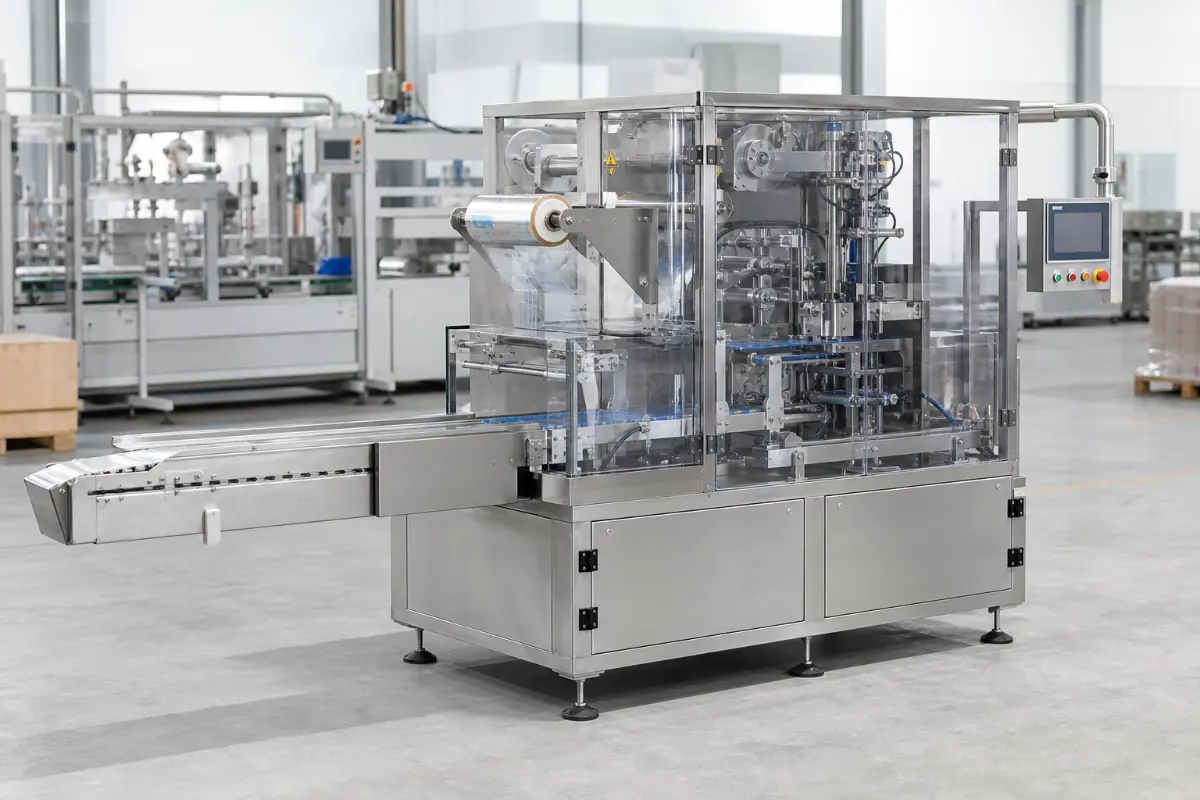
Packaging equipment is highly sensitive to product behavior. Free-flowing granules, sticky sauces, fragile cookies, powders, tablets, metal parts and fresh produce all behave differently. A vertical form-fill-seal machine that runs beautifully with dry rice may struggle with dusty flour unless it has the right auger filler, dust extraction and sealing jaw design.
Before calling suppliers, document the product’s size, weight range, temperature, moisture, abrasiveness, fragility and shelf-life needs. If the product is food, pharmaceutical or cosmetic, sanitation and material contact surfaces matter. Stainless steel, washdown ratings, clean-in-place access and hygienic welds are not luxury details in wet or regulated environments. They are part of the machine’s fitness for purpose.
Know the main machine families
Most packaging lines combine several machine types. Primary packaging equipment puts the product into its first container: pouch machines, flow wrappers, blister machines, bottle fillers, cappers and sealers. Secondary packaging equipment groups those units into cartons, trays, shrink bundles or cases. End-of-line equipment labels, weighs, inspects, palletizes and wraps loads for transport.
The buyer’s mistake is to evaluate each machine as if it operates alone. In reality, a filler, capper, labeler and case packer become one system. The slowest or least reliable station sets the pace. Conveyors, accumulation tables, sensors and controls can matter as much as the main machine frame.
Speed is not the same as output
Suppliers often quote a maximum speed: bags per minute, bottles per hour or cartons per minute. That number is useful, but it is not the same as real production. A machine rated at 80 packs per minute may deliver far less once changeovers, film splices, label roll changes, cleaning, quality checks and small jams are counted.
Ask about sustained speed with your actual product and packaging material. Then ask for expected uptime and overall equipment effectiveness, often called OEE. In many factories, the practical question is not, “How fast can it run?” It is, “How many saleable units will it produce during one paid shift?”
"The cheapest machine is often the most expensive one after the first breakdown."
Changeover may decide the purchase
Many companies no longer run one product in one package all day. They run short batches, seasonal designs, private-label work and multiple sizes. In that world, changeover time can be more important than top speed. Tool-less adjustments, recipe storage, servo controls, quick-release forming sets and clear operator prompts can save hours each week.
Ask suppliers to demonstrate a real changeover, not just describe it. Watch how many tools are required. Count the adjustment points. Notice whether guards, belts and forming parts are easy to remove. If trained technicians are needed every time the package changes, the production schedule will eventually feel it.
Controls, sensors and data are now central
Modern packaging machines increasingly rely on programmable logic controllers, human-machine interfaces, servo motors, vision systems, checkweighers and networked data. This can improve accuracy and troubleshooting, but it also creates dependence on software, electrical support and spare electronic parts.
Ask which control platform is used and whether your maintenance team already supports it. Common industrial platforms can be easier to service than obscure proprietary systems. Also ask what data the machine records: rejects, stoppages, batch counts, alarm history and production rates. Good data turns vague complaints into solvable problems.
Material compatibility can make or break a line
Packaging machines do not run “film” or “cartons” in the abstract. They run specific materials with specific thickness, stiffness, coatings, friction, curl and sealing behavior. A sustainable material may be excellent for branding but difficult to form, seal or cut at high speed. Paper-based packaging, recyclable mono-material films and compostable materials can require careful testing because their heat-seal windows and mechanical properties differ from conventional laminates.
Send real materials to the supplier for trials. Better yet, attend the trial with your operators or engineers. Look for weak seals, scuffed graphics, inconsistent labels, crushed corners and rejected units. A successful factory acceptance test should prove not only that the machine runs, but that it runs your package well.
Service support is part of the machine
A packaging machine is only as good as the support behind it. Before buying, ask where service technicians are based, how quickly they can arrive, whether remote diagnostics are available and which spare parts are normally stocked. A rare imported part that stops a $500,000 line for a week is not a minor issue.
Request a recommended spare-parts list for the first year. Belts, knives, heaters, sensors, vacuum cups, sealing jaws and wear strips may be ordinary consumables. Knowing their cost and lead time helps reveal the true economics of ownership. Training also matters. Operators should understand not just buttons, but causes: film tracking, seal temperature, product timing and jam recovery.
Calculate total cost, not purchase price
The invoice price is only the beginning. Total cost includes installation, conveyors, guarding, compressed air, electrical work, tooling, validation, training, spare parts, maintenance labor, energy, waste and downtime. Compressed air, in particular, is often overlooked. It is convenient, but it can be an expensive utility if a machine uses large volumes continuously.
Financing and depreciation matter too. A more expensive machine may be the better buy if it reduces labor, cuts giveaway, lowers rejects or enables higher-margin packaging formats. Conversely, automation can be a poor investment if sales volume is uncertain or if the product design is still changing.
Inspect safety and compliance early
Safety should not be negotiated after delivery. Packaging machines can include hot sealing jaws, cutting blades, moving belts, rotating shafts, vacuum systems and pneumatic actuators. Look for proper guarding, interlocks, emergency stops, lockout provisions and clear manuals. In North America and Europe, buyers should also consider applicable electrical, machinery and workplace safety requirements before shipment, not after installation.
For food and pharmaceuticals, documentation can be as important as steel. Material certificates, contact-surface specifications, calibration records, cleaning procedures and validation support may be required by customers or regulators. A low-cost machine without documentation can become expensive when an auditor asks basic questions.
Use trials, references and acceptance tests
Good suppliers welcome scrutiny. Ask for customer references in a similar product category. Visit a running installation if possible. During factory acceptance testing, use your product, your packaging material and realistic operating conditions. Define pass-fail criteria in writing: speed, weight accuracy, seal integrity, reject rate, changeover time and noise level.
After delivery, run a site acceptance test before final payment if the contract allows it. Factory conditions are controlled; your plant may have different humidity, air quality, floor layout, operators and upstream equipment. The final test is not whether the machine looks impressive. It is whether it produces consistent, saleable packages in your environment.
The smart buyer thinks like an operator
The best packaging machine buyers spend time beside the line. They ask operators where jams happen, maintenance technicians which parts fail and quality staff which defects customers notice. They do not buy only for the first week of production; they buy for the third year, when the machine has run millions of cycles and the original sales presentation is forgotten.
A sound purchase balances speed, reliability, flexibility, sanitation, safety and support. It also leaves room for growth. If demand rises, can the machine run faster? If the package changes, can it be retooled? If a retailer demands serialization, inspection or new labeling, can the controls adapt?
In the end, a packaging machine is a promise made in steel, sensors and software: that every product leaving the line will be protected, presentable and ready for the market. Buy it with the seriousness that promise deserves.