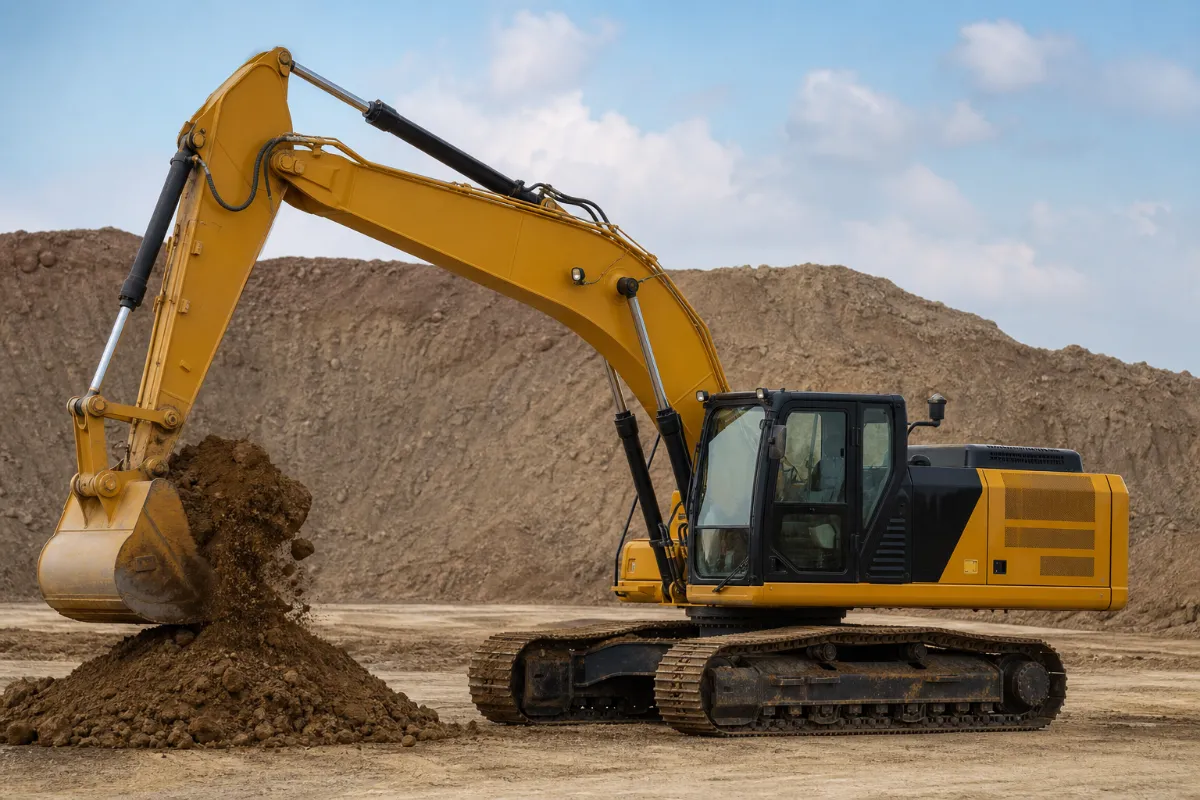
Excavators are built to do hard, repetitive work: digging, lifting, grading, hammering, loading and trenching in conditions that are rarely kind. Yet most failures do not arrive as a single dramatic event. They begin as a slow hydraulic leak, a hot final drive, a weak battery, a worn bucket pin or a track that keeps losing tension. The operator notices the machine feels different. The site ignores it for a day. Then the machine stops.
The useful way to think about excavator maintenance is not as a checklist after something breaks, but as a discipline of listening. Oil color, pump noise, exhaust smoke, track alignment and sluggish boom movement all tell a story. The earlier that story is read, the cheaper it usually is.
Hydraulic leaks and weak hydraulic power
The hydraulic system is the heart of an excavator. It powers the boom, arm, bucket, swing motor and travel motors. In many modern machines, hydraulic circuits operate at pressures of several thousand pounds per square inch, which is why a small leak should never be treated casually. A pinhole leak can inject oil through skin and cause a medical emergency.
Common causes include cracked hoses, damaged seals, loose fittings, contaminated oil and worn pump components. If the boom lifts slowly, the bucket curls weakly, or the machine loses power as oil warms up, the issue may be internal leakage inside a cylinder or control valve, not just an external drip.
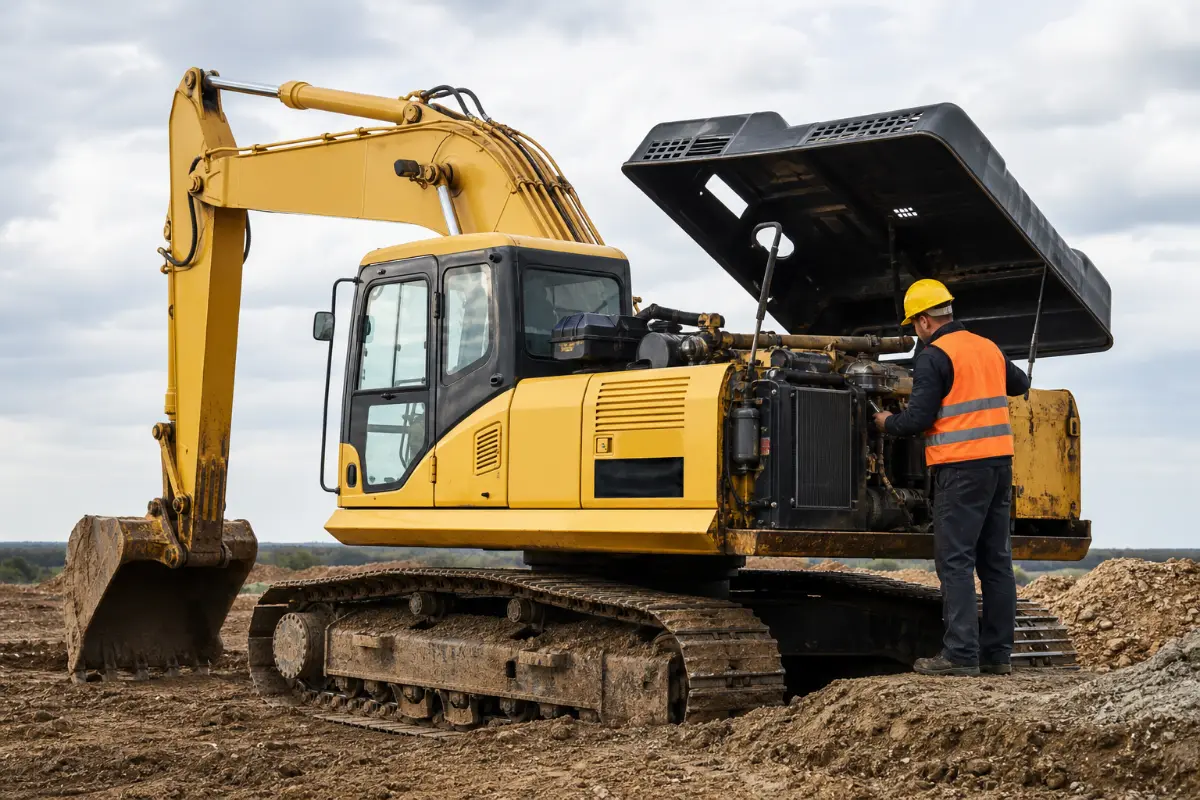
The solution begins with safety. Depressurize the system before inspection, clean the suspected area, then look for fresh oil. Replace damaged hoses with parts rated for the machine’s pressure. Change filters at the manufacturer’s interval, and use the specified hydraulic fluid. The wrong oil can foam, overheat or damage seals. If performance remains weak after basic service, pressure testing by a qualified technician is the next step.
“A clean hydraulic system is a productive hydraulic system.” It sounds simple, but contamination remains one of the most expensive enemies in heavy equipment.
Engine starting problems
When an excavator will not start, the first suspect is often the battery. Construction machines sit outside, vibrate for hours and draw power for lights, monitors, sensors and fuel systems. Weak batteries, corroded terminals and poor ground connections are common. In cold weather, thick oil and lower battery output make the problem worse.
Fuel issues are another frequent cause. Water in diesel, clogged fuel filters, air in the fuel line or a failing lift pump can prevent proper combustion. Modern diesel engines also rely on electronic control modules and sensors, so a no-start problem may involve fault codes rather than a purely mechanical defect.
Start with the basics: check battery voltage, clean terminals, inspect cables and confirm that the starter is receiving power. Drain water from the fuel separator and replace clogged filters. If the engine cranks but does not fire, avoid excessive cranking, which can overheat the starter. On newer machines, pull diagnostic codes before replacing parts blindly.
Overheating
Overheating is usually a symptom, not the root disease. Excavators work in dust, mud, demolition debris and high ambient temperatures. Radiators and oil coolers collect dirt and chaff. Fan belts loosen. Coolant loses its corrosion protection. Hydraulic oil overheats when filters clog, pumps wear or operators run attachments that demand more flow than the machine can comfortably provide.
The fix is often practical. Blow out the cooling package with low-pressure air from the correct direction, taking care not to fold radiator fins. Check coolant level only when the engine is cool. Inspect hoses, clamps, belts and the radiator cap. If overheating occurs mainly during hydraulic work, check hydraulic oil level, filters and attachment settings. A breaker or mulcher that is improperly matched to the excavator can turn a good machine into a heat factory.
Undercarriage wear and track problems
The undercarriage is one of the costliest wear areas on a tracked excavator. Tracks, rollers, idlers, sprockets and pins live in abrasive material all day. A track that is too tight accelerates wear on pins, bushings and final drives. A track that is too loose can derail, especially when turning on uneven ground.
Operators should clean mud and packed material from the undercarriage, especially in freezing conditions. Track tension should be checked on level ground according to the service manual. Inspect sprocket teeth for hooking, rollers for oil leakage and track shoes for bent or missing hardware. Turning habits matter, too. Constant high-speed counter-rotation is convenient, but it grinds money out of the undercarriage.
Electrical faults and sensor warnings
Excavators are more electronic than many people realize. Even rugged machines now depend on wiring harnesses, controllers, pressure sensors, angle sensors, displays and emissions systems. A loose connector or rubbed-through wire can cause intermittent faults that appear and vanish with vibration.
Do not ignore warning lights. They are not decorations. Record the code, note what the machine was doing when it appeared and inspect visible wiring for abrasion, moisture or rodent damage. Many electrical problems are made worse by pressure washing directly into connectors. Use dielectric grease where recommended, keep battery voltage healthy and resist the temptation to bypass sensors. A bypass may get the machine moving, but it can also hide a condition that destroys a pump or engine.
Excessive smoke or loss of engine power
Black smoke often suggests too much fuel or not enough air. Check the air filter, turbocharger hoses and fuel quality. Blue smoke can indicate oil burning, while white smoke may point to incomplete combustion, coolant intrusion or cold-start conditions. Diagnosis depends on temperature, load and engine hours.
A clogged air filter is an easy fix, but do not clean filters aggressively with high-pressure air; it can damage filter media. Replace them when needed. If power loss continues, inspect fuel filters, injectors and turbo boost. For emissions-equipped machines, a derate may be triggered by diesel exhaust fluid quality, a clogged diesel particulate filter or a sensor fault.
Bucket, boom and pin wear
Loose pins and bushings reduce digging accuracy and create shock loads through the front attachment. A bucket that rattles badly is not just annoying; it is a sign that wear is spreading. Grease is cheap. Line boring, welding and downtime are not.
Grease all service points at the recommended interval, more often in water, sand or demolition work. Inspect bucket teeth and adapters. Missing teeth reduce productivity and can damage the bucket lip. Replace worn cutting edges before the bucket structure itself becomes the wear part.
Final drive and swing problems
Grinding noises, slow travel, oil leaks near the travel motor or metal in final drive oil are warning signs. Final drives carry heavy loads and are expensive to rebuild. Swing bearing problems may show up as clunking, uneven rotation or visible movement between the upper structure and carbody.
Check final drive oil at the correct interval and look for contamination. Keep the swing bearing greased and inspect swing gear oil if the machine design uses a separate compartment. If noise appears, stop early. Running a failing gearbox until it destroys itself is one of the least economical decisions on a job site.
A practical maintenance habit
The best solution to most excavator problems is routine attention: daily walkarounds, fluid checks, clean coolers, greased pins, proper track tension and honest operator feedback. A five-minute inspection before the shift can prevent a five-day repair. In equipment, as in medicine, early diagnosis is usually the bargain.
Excavators are tough, but they are not indifferent. They reward clean oil, correct adjustments and operators who notice small changes. The companies that understand this tend to spend less time waiting for a service truck and more time moving earth.