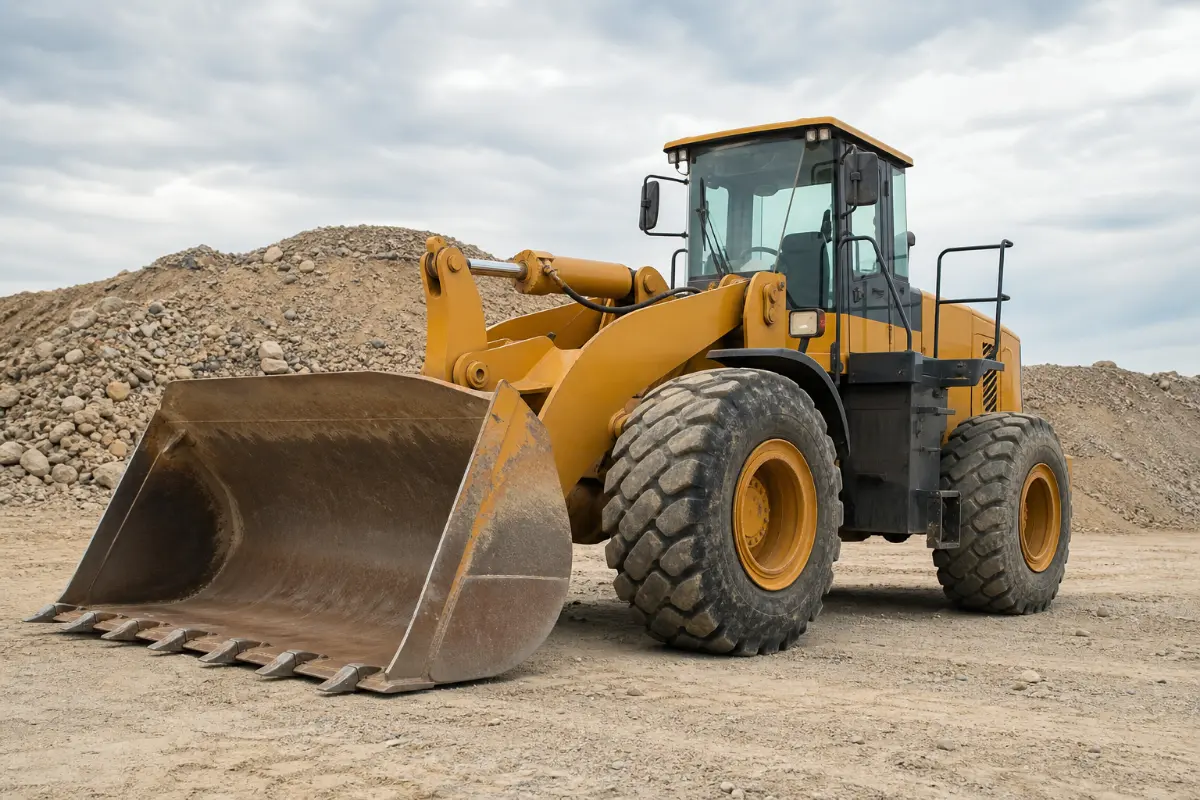
A used wheel loader can be a bargain, or it can become a very large invoice on four tires. The difference is often visible before money changes hands, if the buyer knows where to look. Wheel loaders live hard lives: they dig into piles, carry heavy loads, idle for long hours and work in dust, mud, salt and heat. Paint can hide some of that history. Steel, oil and pins usually do not.
Here are 10 checks worth making before you buy. Bring a flashlight, clean rags, a tire gauge if available and, ideally, a mechanic who has no stake in the sale.
1. Verify the machine’s identity and paperwork
Start with the serial number plate and compare it with the bill of sale, service records and any financing or ownership documents. A mismatch is a warning sign. Ask for maintenance logs, oil sample reports, repair invoices and emissions-related records if the loader is new enough to use aftertreatment equipment. A thin folder is not always fatal, but a detailed history is valuable because it shows patterns: repeated overheating, recurring hydraulic leaks or a transmission rebuild done properly.
2. Read the hour meter, then question it
Hours matter, but they are not the whole story. A loader with 8,000 well-maintained quarry hours may be more honest than a machine showing 3,000 hours with worn pedals, loose pins and a polished steering wheel. Look for consistency. Does the wear on the bucket edge, cab controls, seat and articulation joint match the meter? Hour meters can fail or be replaced. The machine itself is the better witness.
"On a loader, the hour meter tells you what to ask. The wear tells you what to believe."
3. Inspect the engine cold
Ask the seller not to warm the machine before you arrive. A cold start reveals more than a machine already brought up to temperature. Watch for hard starting, excessive smoke, uneven idle and warning lights. A brief puff of smoke may be normal on older diesels, but heavy blue smoke can suggest oil burning, while white smoke may point to unburned fuel or coolant issues. Remove the oil fill cap carefully while the engine idles and look for excessive blow-by, which can indicate worn rings or cylinders.
4. Check fluids for clues
Engine oil, coolant, hydraulic oil and transmission fluid are all evidence. Milky oil can mean water contamination. A burnt smell in transmission oil is a serious concern. Hydraulic oil should generally look clean, not dark, foamy or full of metal glitter. Check coolant for oil film and ask what coolant type has been used; mixing incompatible coolants can create deposits and cooling problems. Low fluid levels are not just maintenance oversights. They may be symptoms of leaks the seller has stopped topping off.
5. Look hard at hydraulics
The hydraulic system is the muscle of a wheel loader, and repairs can be expensive. Inspect cylinders for scored rods, wet seals and fresh paint that may hide seepage. Check hoses for cracking, abrasion, bulging and poor routing. Operate the boom and bucket through the full range. Movements should be smooth, not jerky or weak. With the bucket raised, watch whether it drifts down faster than expected. Some drift can occur, but pronounced movement may indicate internal leakage in cylinders or control valves.
6. Examine pins, bushings and the loader linkage
Loose pins and bushings are common on high-hour loaders, especially around the bucket, lift arms, bellcrank and tilt linkage. Raise the bucket slightly and gently tilt or curl it while watching for slop. Listen for clunks. Excessive play reduces digging performance and can make grading sloppy. It also grows worse over time, wearing expensive bores in the linkage. Replacing pins and bushings is routine work; line-boring worn structures is a more serious cost.
7. Test the articulation joint and steering
Most wheel loaders steer by articulating at the center of the machine. That joint carries enormous stress. Inspect the upper and lower pivot areas for cracks, missing grease, rust dust and movement. During a test drive, steer lock to lock and listen for popping or grinding. The steering should respond cleanly without wandering. A worn articulation joint can be a major repair because it involves heavy components, careful alignment and significant labor.
8. Study the tires and rims
Loader tires are not cheap, and a set of large radial tires can change the economics of a purchase. Check tread depth, sidewall cuts, uneven wear and chunking. Look for matching tire sizes and similar wear across the axle. Mismatched rolling radius can stress drivetrain components, especially on four-wheel-drive machines. Inspect rims for cracks, corrosion and welded repairs. If the loader worked in waste handling, demolition or scrapyards, expect tire damage and look even closer.
9. Drive it under load
A short lap around a yard is not enough. If possible, push into a pile, lift material, climb a grade and shift through all ranges. The transmission should engage without violent delay or slipping. Brakes should stop the machine straight and firmly. Listen for axle whine, grinding and driveline vibration. Check the differential lock if equipped, and confirm all gauges behave normally under load. Heat is the enemy: a loader that runs fine for five minutes but overheats after 30 may be hiding a clogged radiator, weak fan drive or deeper engine trouble.
10. Inspect the bucket, frame and safety equipment
The bucket tells you how the loader was used. Look at the cutting edge, side plates, heel plates and welds. Cracks near the lift arm towers or frame are more concerning than ordinary bucket wear. Inspect the ROPS or FOPS cab structure for damage; these protective systems should not be casually welded or modified. Confirm lights, horn, backup alarm, mirrors, wipers, seat belt and fire extinguisher bracket are present and functional. Safety defects may seem small during negotiation, but they matter on a job site and may affect compliance with company rules.
What a fair inspection really buys you
No used wheel loader is perfect. The goal is not to find a flawless machine; it is to price the known problems and avoid the unknown disasters. A leaking hose, worn cutting edge or torn seat can be part of a fair deal. A slipping transmission, contaminated hydraulic system or cracked frame should change the conversation immediately.
For higher-value machines, consider fluid analysis and a professional inspection. Oil sampling is not magic, but it can reveal coolant, fuel dilution, silicon from dirt ingestion or abnormal metal wear. Dealer inspection reports can also help, though they should be read critically. The seller’s report is useful; your own report is better.
The best buyers are patient. They walk around the machine twice, operate every function and resist falling in love with fresh paint. A wheel loader is a production tool. Its value lies not in how it looks on the lot, but in how many tons it can move tomorrow without calling a service truck.